Programmatic and, in turn, real-time bidding (RTB) arrived with “real” promise for the world of digital advertising and, initially, they were able to fulfil that promise. But, as the open internet has grown (and continues to grow), the programmatic ecosystem has failed to keep pace.
The infrastructure has led to rising costs, stifled performance, challenging circumstances for publishers and, ultimately, an industry dominated by a handful of players.
That’s the opinion of Index Exchange President and CEO, Andrew Casale, and Bedrock Co-founder and CEO, Shane Shevlin.
“When you speak to marketers who assign disproportionate amounts of their budget to those companies, they don’t do it because they love Google or Meta,” said Andrew. “They might have great reps there, but they do it because they perform. They do it because they drive outcomes. They do it because they products. I think that’s what’s broken.”
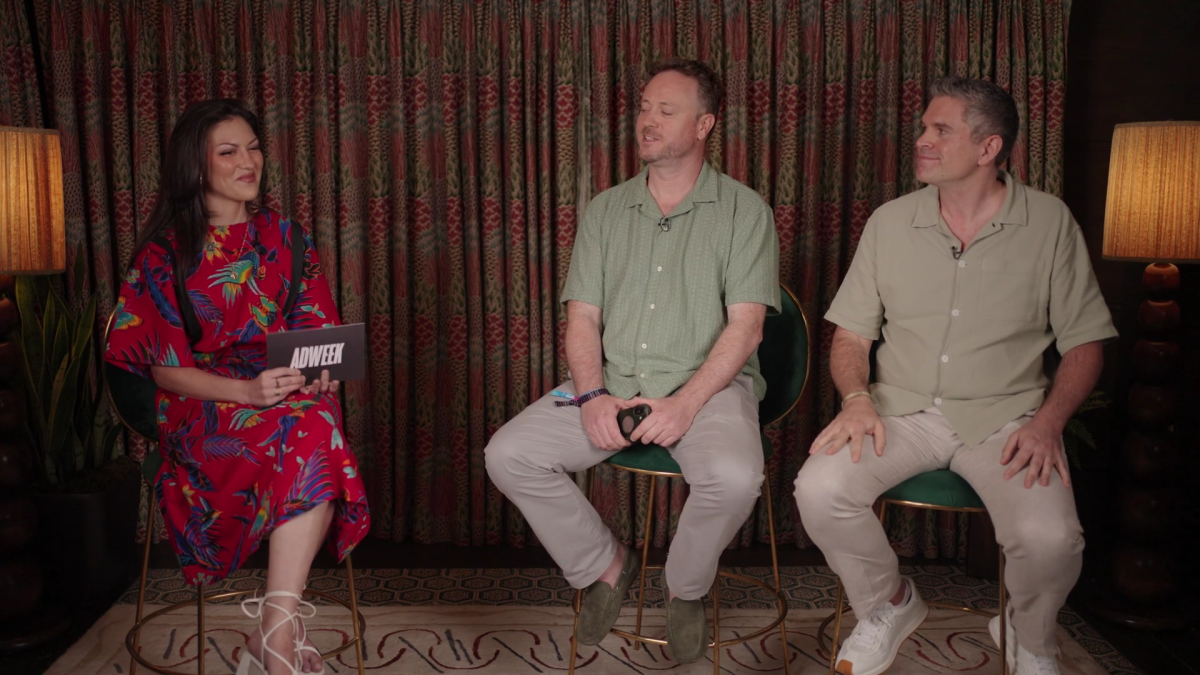
On the back of debuting the world’s first containerized DSP, Andrew and Shane sat down with Adweek’s Kendra Barnett at the Innovators Unscripted event at POSSIBLE to discuss how our partnership with Index will reshape programmatic buying.
Making deals work better
The arrival of programmatic and RTB was “a technical marvel,” according to Andrew. But, while being able to run an auction in 200-300 milliseconds was once an incredible feat, technology has advanced and running across the internet at those speeds has become slow.
The problem is, as general computing technologies have advanced, RTB remains largely modelled in the same way. As a result, DSPs have been unable to keep pace with the growth of the internet, being forced to throttle the internet, because it’s too cost-prohibitive at this scale.
And that was one of the things Shane set out to change when he founded Bedrock.
“One of our cornerstones as a business is “make deals work better.” So, on that basis, it’s pretty important that we get to see all of the available traffic inside of a deal… that deal is very valuable to our media buyer. So, this partnership is a step-change in terms of us being able to get visibility on that traffic within that trusted currency and buy it at the most competitive price,” said Shane.
“Some data’s great for good performance, more data’s better. That extra data will come from trusted publishers. It’ll mean better quality. And it’ll mean better performance.”
– Shane Shevlin, Co-founder and CEO, Bedrock Platform
Business as usual
Importantly, this “step-change” has not come about from either Bedrock or Index turning their backs on their values.
Despite sitting within the Index Cloud infrastructure, Bedrock remains completely independent and Index has no visibility of what is happen within the Bedrock platform.
Shane explained: “In terms of how we operate the external instance of our bidder, nothing’s really changed. So, what’s great about containerization… is that the image we’ve deployed inside Index’s data center is cryptographically signed. The code of our application is not visible to Index, so we retain full independence of how we actually decision on an ad.”
Endless opportunities
Bedrock’s containerized bidder is already proving to be incredibly effective in addressing the challenges that have plagued the industry for several years.
“The most exciting and realistic win that we’re already seeing, and we already see with the Bedrock bidder, is QPS caps – which have historically led to just choking the amount of supply that goes to a DSP – open up dramatically,” said Andrew.
“It means more of our customer supply becomes addressable to the bidder and addressable to the buy. It also means that campaign that was targeting a really scarce audience, that could only scale to maybe 25% of the budget on the open internet, that needed the walled gardens to scale the other 75%, can now scale it to buy to 100%, because the open internet’s actually appearing larger now than it was before in a throttled state.”
“If we’re typically waiting 60-80 milliseconds before we can even get to make the decision, or assess the bid, if that drops to sub-five milliseconds, or even lower, what are we going to do with that additional, leftover latency? We’ll give it to somebody who’s got big ambition, with a fatter model, looking to evaluate all the variables of the bid request, rather than just four or five.”
– Shane Shevlin, Co-founder and CEO, Bedrock Platform
While early progress has been positive, where containerization is really set to show truly groundbreaking results within live streaming environments, which have historically been incredibly difficult to get right programmatically.
“The one we’re most excited about is live streaming environments, where you’ve got a ton of additional problems beyond the bid request round-trip, latency, dropped bids, traffic shaping, and that is concurrent users and unpredictability of the ad slot for a live event,” said Shane. “So, if you’re in the data center where the decision is finally made to run the ad slot, and you’ve got a ton of opportunity and demand that you need to present at that moment, then we’re really well-positioned to fill that gap.”
“The end hope that I believe this will create is a more competitive internet, an internet where bidders have more ubiquitous access to supply, the buy is scaled better, and buyers start saying that the internet’s bigger than they thought and it performs better than they thought.”
– Andrew Casale, President and CEO, Index Exchange
Learn more about our partnership with Index Exchange here.
Interested in having a chat about what our containerized bidder could do for you? Contact us here.