IAB Tech Lab recently published the AAMP 3.0 draft, and it is the first version that defines a new specification: OpenProposal. All previous agentic releases were reference implementations of buyer and seller agents. This one is different, it writes the rules down. The draft is open for public comment until 22 October.
The main difference is who shapes the package. Earlier versions showed it through example code: the seller built a response to the buyer’s request, and any change was a round of offer and counter. In OpenProposal the seller publishes its inventory up front as a menu: which options exist, which are in the base price, and what each extra costs. The buyer agent picks what fits its goals and knows the final price before contacting the seller. A brief is no longer required, but a buyer can still send one and get a custom proposal back in the same format.
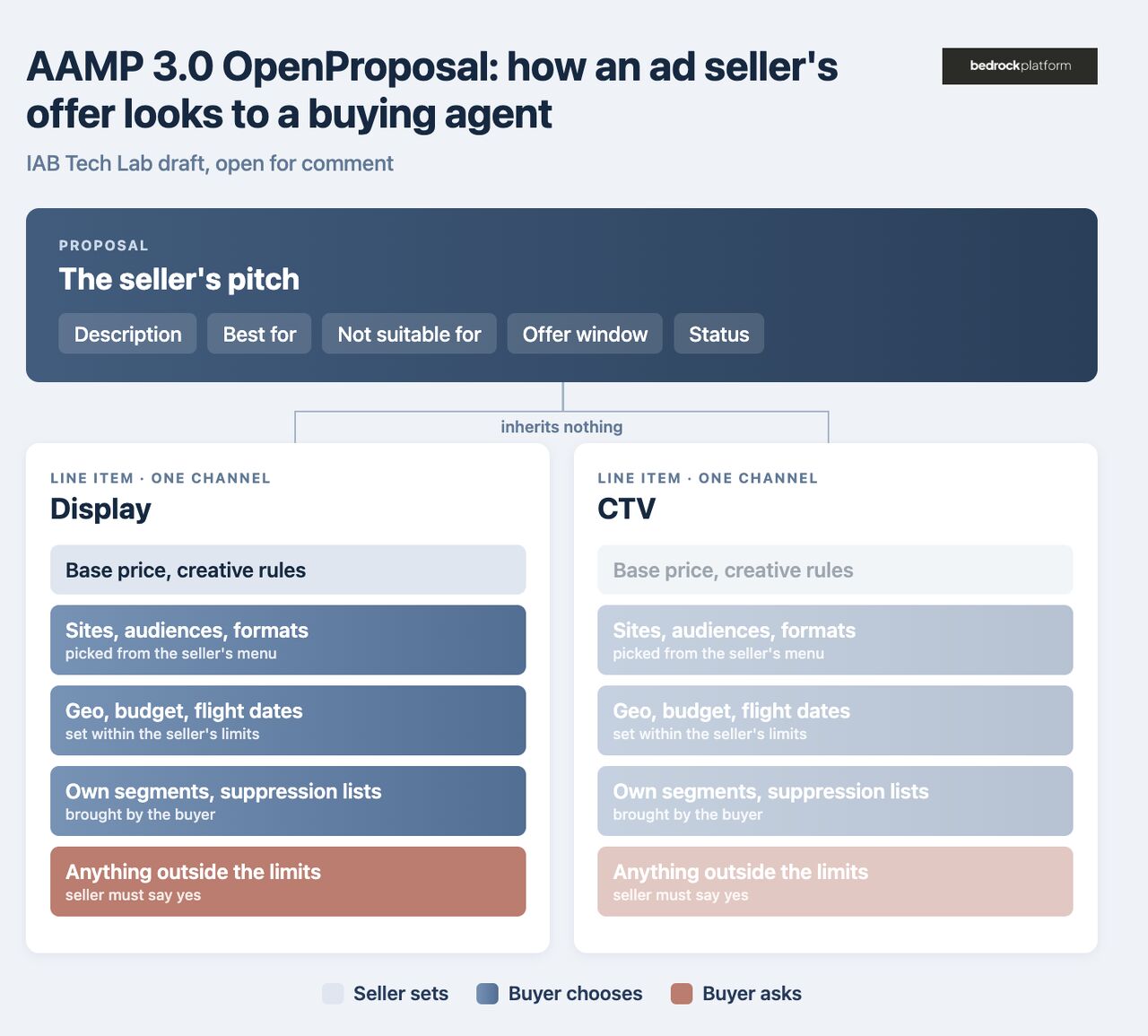
This is defined through two core objects: Proposals and Line Items. A proposal is the parent: identity, offer window, status, and a description for the agent to read, with best_for and not_suitable_for as guidance for agent logic. Line items inherit nothing from it.
A line item is the actual buyable unit: one channel, its audiences, inventory, creative requirements and pricing, shared by direct buys, programmatic guaranteed and PMP deals. Each field has a label that says who sets it: the seller alone, the buyer within the seller’s limits, or the buyer only with the seller’s yes. A line item can also accept the buyer’s own audience segments and suppression lists.
The buyer replies through those fields: it picks from the menus, sets budget and flight dates within the limits, adds its own data and creatives, and asks for the few things outside them. The buyer’s side is still thin, though. The spec does not define what a brief contains, or how the buyer sends its choices back. Its own display example prices a clean room add-on into the final rate, yet no field records that the buyer picked it.
A spec means every seller that follows it describes its offer the same way. Today a planner sends an RFP, gets back PDFs and spreadsheets in a different shape from each seller, and retypes them into one plan, while the seller’s team builds each response by hand. With one format, a buyer agent can read the published offers of a hundred sellers at once, and the seller answers all of them with the same menu. The spec also reaches past the media buy: creative delivery and approval, the measurement vendor, makegoods, reporting and billing.